

Tags:
Staying ahead of the curve is crucial for acing any AWS interview. With the cloud landscape evolving rapidly, interviewers are looking for candidates who not only understand core services but are also knowledgeable about the latest innovations. Based on the major announcements from AWS re:Invent 2024, this guide will equip you with the latest information and key concepts to impress your interviewers in 2025.
1. Generative AI and Machine Learning: The New Frontier
Generative AI is the hottest topic in tech right now, and AWS is at the forefront. Interviewers will expect you to be familiar with how AWS is integrating GenAI into its ecosystem to solve real-world problems.
A key development is the integration of generative AI into operational tools. For example, Amazon Q Developer now offers advanced capabilities to assist developers and operators. It can help with tasks like code generation, debugging, and even investigating operational issues directly within the AWS console. Being able to discuss how such tools can improve developer productivity and reduce mean time to resolution (MTTR) is a strong talking point.

Other important GenAI updates include enhancements to Amazon Bedrock, which now features a marketplace for foundation models and new capabilities for managing prompts at scale. Understanding how to leverage these services to build and deploy generative AI applications is a highly sought-after skill.
2. Database and Analytics Innovations: Moving Towards a Zero-ETL Future
Data is the lifeblood of modern applications, and AWS is making it easier than ever to manage and analyze it. A major trend is the move towards “zero-ETL” (Extract, Transform, Load) integrations, which eliminate the need for complex and brittle data pipelines.
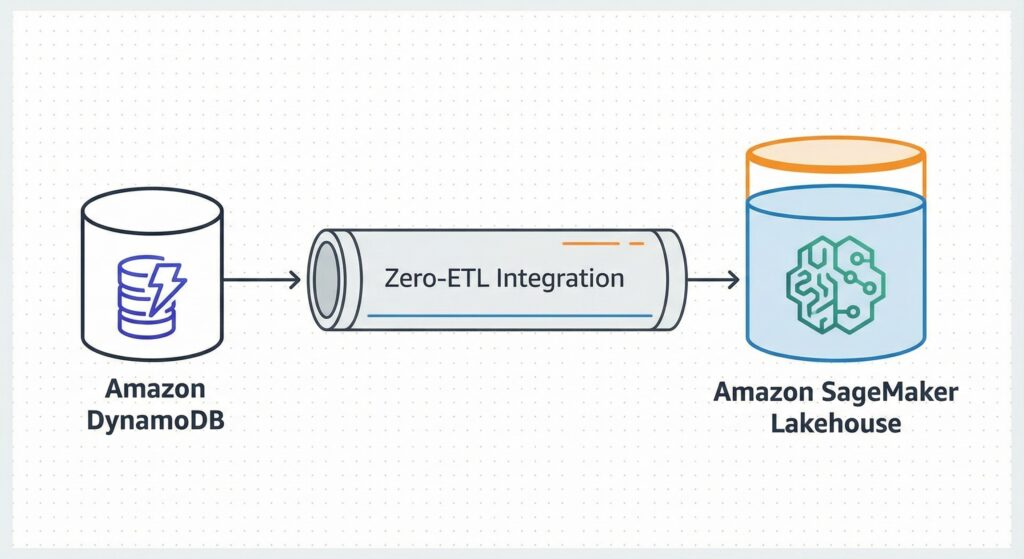
A prime example is the Amazon DynamoDB zero-ETL integration with Amazon SageMaker Lakehouse. This feature allows you to automatically replicate data from your operational DynamoDB tables to a SageMaker Lakehouse for analytics and machine learning, without writing a single line of ETL code. This not only simplifies architecture but also ensures that your analytics are always based on near real-time data.
Another significant announcement is Amazon Aurora DSQL, a new serverless, distributed SQL database designed for globally distributed applications requiring high availability and strong consistency. For analytics, Amazon S3 Tables are now optimized for analytics workloads, offering faster query performance for data stored in S3.
3. Compute and Infrastructure Enhancements: Smarter and Faster
AWS continues to innovate in its core compute offerings, providing more specialized and efficient infrastructure.
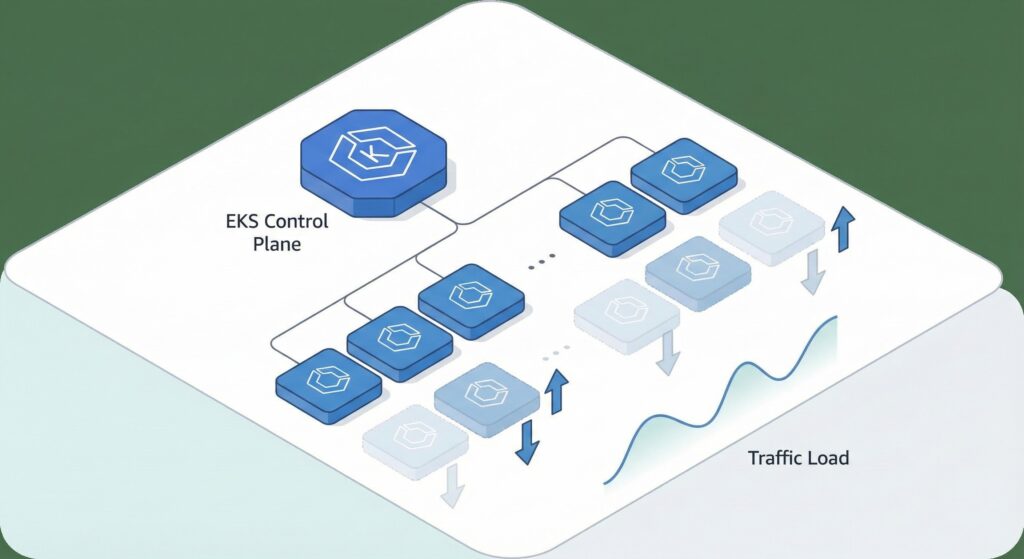
For Kubernetes users, Amazon EKS Auto Mode is a game-changer. It simplifies cluster management by automating the provisioning and scaling of worker nodes based on your application’s specific needs. This allows you to focus on deploying applications rather than managing infrastructure.
On the EC2 front, new instance types like P5en are designed to accelerate deep learning and generative AI workloads, while I8g instances, powered by AWS Graviton4 processors, offer superior performance and cost-efficiency for storage-intensive applications.
4. Core AWS Concepts: The Foundation of Your Knowledge
While new services are exciting, never neglect the fundamentals. Interviewers will always test your understanding of core AWS concepts. A solid grasp of networking, compute, storage, and security is non-negotiable.
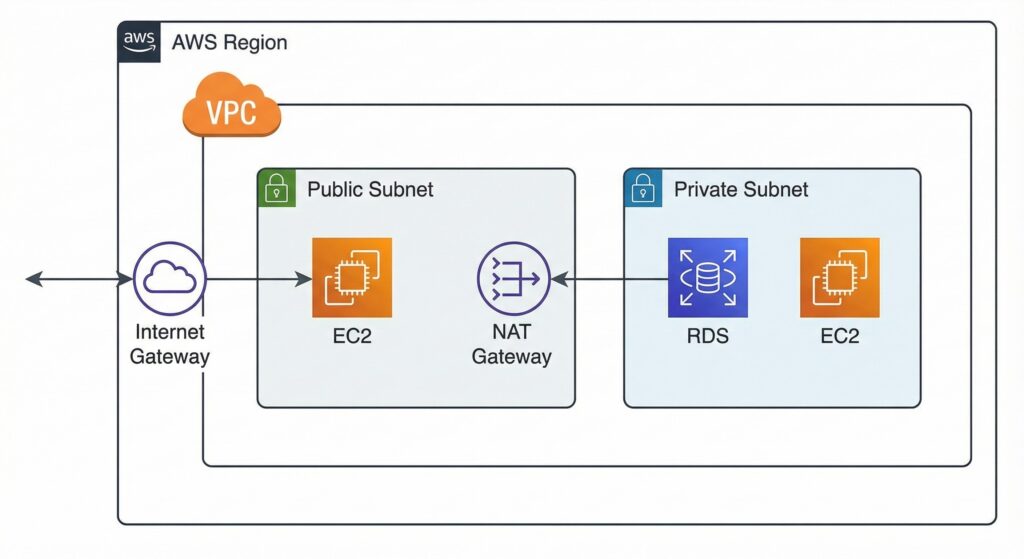
Be prepared to draw and explain a standard Virtual Private Cloud (VPC) architecture, including public and private subnets, internet gateways, NAT gateways, and security groups. Understand the difference between various storage services like S3 (object storage), EBS (block storage), and EFS (file storage), and know when to use each.
Finally, familiarize yourself with the AWS Well-Architected Framework. Its six pillars—Operational Excellence, Security, Reliability, Performance Efficiency, Cost Optimization, and Sustainability—provide a consistent approach for evaluating and designing scalable and secure systems.
5. Scenario-Based Interview Preparation
To truly stand out, practice applying your knowledge to real-world scenarios. Here are a few examples of questions you might encounter:
- Design a highly available web application: How would you use ELB, Auto Scaling, and Multi-AZ deployments to ensure your application can withstand the failure of a single data center?
- Create a disaster recovery plan: What services would you use to back up your data and restore your application in a different region in case of a regional outage? (Think S3 Cross-Region Replication, RDS Read Replicas, Route 53).
- Optimize cloud costs: How would you identify underutilized resources and implement cost-saving measures like Reserved Instances, Savings Plans, or Spot Instances?
Conclusion
Success in an AWS interview comes from a blend of foundational knowledge and an understanding of the latest trends. By mastering core concepts and staying informed about recent innovations in GenAI, serverless data, and intelligent infrastructure, you’ll be well-equipped to demonstrate your expertise and land your dream job in 2025. Keep learning, keep building, and good luck!

Comments (0)